Traditional Karate
Weekly Newsletter • 4 April 2026
Weekly Update from Wadō-Ryū Benkyō
Hello,
Welcome to your 17th weekly update from Wadō-Ryū Benkyō. Below you’ll find this week’s course review, the latest long-format video, a featured article, updates, and this week’s principle.
🥋 1. 29th March Course Review
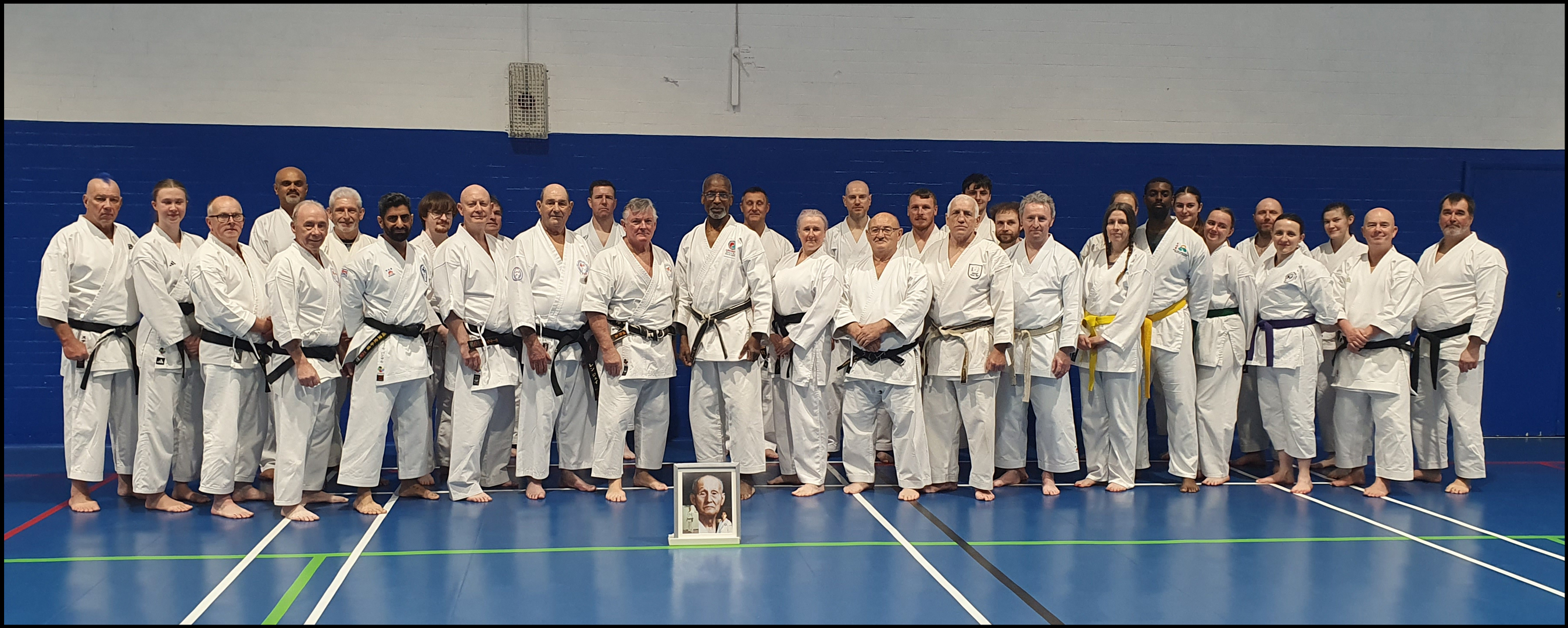
Firstly, a huge thank you to everyone who attended and supported the course, and especially to the instructors who made it such a memorable and valuable day.
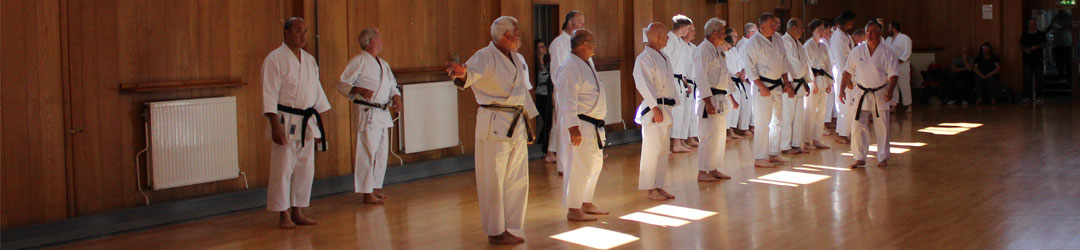
After an excellent warm-up led by Eugene — which set the tone for the day — we moved straight into a high-energy and interactive Wadō-Ryū session. The focus was on Taisabaki, Irimi, and Kuzushi, exploring a series of ohyō that demonstrated how to avoid an attack while setting up a counter within the same movement, and then following through to control or take down the uke. Classic Wadō-Ryū.
It was a real tour de force of Ten-I, Ten-Gi, and Ten-Tai — moving the whole body as one — and making full use of shizumu and body weight. For those who have been following the channel or newsletter over the past few months, this felt like a natural progression and an opportunity to bring those principles to life in practice.
As always, an hour was nowhere near enough to do the topic justice, and it passed all too quickly. However, judging by the smiles (and the slightly scrambled brains), it was clear that everyone came away with a deeper appreciation of how to move the body effectively. A particular highlight was the enthusiasm for the demonstrations, with plenty keen to step forward — although one or two may have been “encouraged” more than others.
After a short break, Codrington Sensei took the session forward, offering a clear insight into what it takes to reach world-class level — attention to detail, precision, and a deep understanding of movement and coordination. Watching such control and purpose in action was impressive in itself, but more importantly, it gave us the opportunity to begin to experience those qualities in our own training.
The focus returned to kihon techniques, but broken down to their most fundamental components and rebuilt step by step. While an hour is not long enough to master a lifetime’s practice, it was certainly enough to highlight what we should be aiming for — control, coordination, repetition, and an awareness of where the body should be at every stage.
A thoroughly thought-provoking session, engaging both the body and the mind, and one that will undoubtedly influence training going forward.
🥋 Saturday Benkyō Class Review – Today’s Training
We began the session with a run-through of the five Pinan kata, placing emphasis on whole-body movement and bringing together the kihon principles we have been developing over the past few months.
The focus was on relaxed, flowing movement, avoiding unnecessary kime, and instead generating power and impact through the movement of the body itself. Particular attention was given to allowing the body to dictate where movements naturally conclude. For example, when performing the mawate into Shōmen Neko Ashi Dachi towards the end of the kata, using the body correctly removes any guesswork — the position is found naturally, allowing for consistent and repeatable finishing points.
We then revisited Pinan Shodan, Sandan, and Yondan, refining smaller details, before spending more time on Pinan Godan. Here the emphasis was on unlocking the body’s natural potential for movement by correctly aligning the feet, torso, and head. Rather than forcing movement, the aim was to work with the body’s weight and structure, allowing technique to emerge more easily and efficiently.
After a thoroughly enjoyable run-through of the Pinan kata, we moved on to Jion, a longer and particularly rich kata within the Wadō-Ryū syllabus. We worked through the kata several times, focusing on key areas such as the initial dropping action (rather than stepping back), the rapid change of direction into Kette Sanbon Zuki, and the role of Neko Ashi Dachi as a transitional stance that supports fluidity and continuity.
Following this, and after performing the kata with go rei nashi, we explored selected movements through jujutsu-based applications. The emphasis here was on maintaining connection between the arms and body to create kuzushi, and on using movement to disrupt and control the opponent before applying technique. A key point was how dropping — without retreating — creates a subtle shift in the centreline, changing the angle of attack while maintaining forward intention.
We then moved on to Rohai, a compact but complete kata that offers a wealth of detail despite its brevity. After several run-throughs, we again explored selected movements through paired application, including the opening hand movements as a method of releasing a wrist grab and unbalancing the opponent. As always, the importance of both hands working together — supporting and enhancing each action — was a central theme.
A great session, with plenty to reflect on and unpack as we continue to develop and move forward in our training.
Saturday sessions continue throughout April except for the 18th April. If you would like to attend a Saturday session for the first time, please get in touch.
🎥 2. This Week’s Long-Format Video
Part 25 - Gyakuzuki Notsukomi Kumite - Kihon Fundamentals
Part 25 – Gyakuzuki Notsukomi Kumite
This week’s video continues the Kihon Fundamentals series, focusing on how Gyakuzuki Notsukomi translates from basic practice into kumite.
Using Kihon Kumite No.1 as a foundation, the session explores how the technique affects body position, head movement, stance, and maai in relation to the opponent. The emphasis is on understanding Gyakuzuki Notsukomi as a complete body action, rather than simply a reverse punch.
Through partner work and movement-based exercises, the video demonstrates how to move freely around the opponent, maintaining correct structure while adapting to position and distance. A key theme is learning to “forget the four walls” and instead work relative to the opponent.
The session also highlights that, when performed correctly, Gyakuzuki Notsukomi is not slow or heavy, but a quick, efficient, and adaptable technique.
A valuable continuation of the series, helping to bridge the gap between kihon and practical application.
Follow the link to watch the full technical breakdown.
📝 3. Featured Article of the Week
Article: Read the full article on the website
Ippon Kumite No.3 – Sanbon Me: Pinan Nidan, Slicing Entry and Taking the Angle in Wadō-Ryū
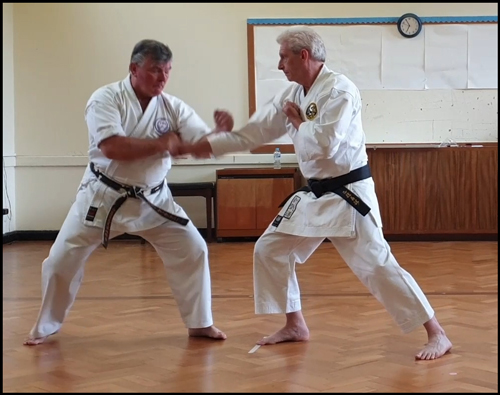
This week’s featured article explores Ippon Kumite No.3 and its direct relationship to the opening movement of Pinan Nidan. What appears at first to be a formal paired sequence reveals a much deeper study of timing, angle, turning movement, and body organisation.
A central image in the teaching is simple but powerful: open the door, let the attack through, then turn. Rather than colliding with the attack, the body opens, pivots, and works from a superior angle. Through this, the technique becomes a study in circular arm action, dropping body weight, slicing through the line, and continuing with flow rather than force.
The article also examines how cover, wrist shape, kuzushi, and angled pressure affect what the uke should actually feel, showing why this waza is far more than a grading exercise. It is a compact lesson in Wadō-Ryū timing, flow, posture, and control.
Follow the link for the full detailed breakdown.
📅 4. Upcoming Courses, Events, or Updates
Things you may want to know about:
- Course and events calendar is live on the website and will be updated regularly, so please bookmark it and check it.
- The May 2026 course dates and location have now been confirmed — you can see the details and book here.
- Website updates: Wadō-Ryū Benkyō is now fully live, but more content is being added all the time, so keep checking back for new articles, videos, and announcements.
- Saturday sessions continue throughout 2026. If you would like to attend a Saturday session for the first time, please contact us here.
🧠 5. Wadō-Ryū Principle of the Week
Sente (先手) — Taking the Initiative
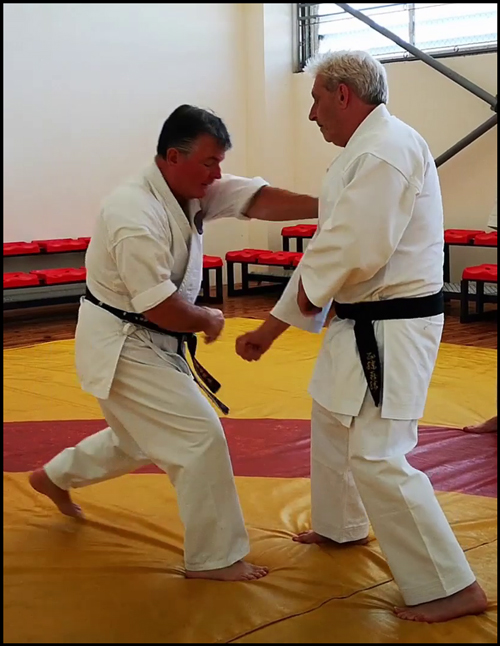
Sente is often translated as “taking the initiative”. In martial arts, it refers to the ability to establish control of the exchange through timing, presence, and intent, rather than waiting passively for events to unfold.
In Wadō-Ryū, sente is not simply about attacking first. It is about recognising the right moment to act, taking command of distance and rhythm, and preventing the opponent from settling into their own intention.
This may be expressed physically through entry, pressure, or superior positioning, but it also has a strong mental dimension. The practitioner who holds sente influences the exchange before technique is even fully visible.
Why Sente Matters
When sente is present, the opponent is forced to respond rather than act freely. This creates several advantages:
- control of timing and rhythm
- superior use of ma-ai
- greater opportunity to unbalance the opponent
- less reliance on speed or strength alone
Rather than being reactive, the practitioner establishes a position from which effective technique can emerge naturally.
Sente in Wadō Practice
Although often associated with kumite, sente appears throughout Wadō training. In kihon, it can be seen in the clarity of movement and intent. In kata, it appears in decisive entering, controlling the line, and taking position before the opponent can recover. In paired work, it is felt in the ability to influence the exchange before the attack can fully develop.
In Simple Terms
Sente means taking the initiative in a way that shapes the encounter before the opponent can impose their own rhythm. In Wadō-Ryū, it is not mere aggression, but calm, timely control.
🙏 Thank You for Being Part of the Community
If you have any questions, video requests, or feedback, contact us here — we read everything.
Wishing you a fantastic week of training,
Roger and The Team
Wadō-Ryū Benkyō